







Tucker Carlson and Dr. Daniel Amen Sound Alarm on Marijuana's Brain Risks
11/21/2025
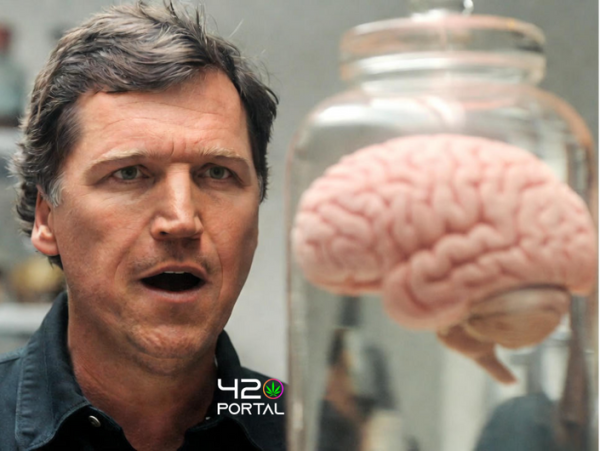
In a recent in-depth podcast conversation, broadcaster Tucker Carlson hosted renowned psychiatrist and brain imaging specialist Dr. Daniel Amen to examine the neurological dangers of modern cannabis use. Amen, drawing from decades of clinical experience and one of the world's largest databases of brain scans, described chronic marijuana consumption—especially high-potency varieties—as producing a distinctive "toxic" pattern in the brain, characterized by markedly reduced blood flow and overall diminished activity.
Presenting SPECT imaging evidence from thousands of patients, Amen showed Carlson scans revealing uneven perfusion and "scalloping" effects in heavy users, particularly affecting cannabinoid-receptor-dense areas like the prefrontal cortex, hippocampus, and temporal lobes. These changes correlate with impaired motivation, executive function, memory, and emotional stability. The discussion highlighted how today's THC levels, often exceeding 90% in concentrates, far surpass those of previous decades, amplifying harm.
A key focus was the vulnerability of adolescent and young adult brains, which continue to mature until around age 25. Amen explained that THC disrupts critical development, elevating risks of anxiety, depression, psychosis, and schizophrenia-spectrum disorders—sometimes dramatically in genetically predisposed individuals. Carlson pressed on testosterone impacts, with Amen affirming that heavy use reliably lowers levels, contributing to reduced drive in young men.
The pair explored broader societal implications, suggesting that widespread cannabis promotion may inadvertently—or deliberately—dull ambition and resilience among youth, aligning with rising mental health crises. Mainstream scientific bodies, including the American Heart Association, acknowledge subtle but persistent cognitive declines in long-term users, equivalent to a quarter-standard-deviation drop in global neurocognition. Meta-analyses confirm impairments in verbal memory, learning, and attention that may linger post-abstinence.
While acknowledging potential medical applications for components like CBD, both emphasized that recreational high-dose use prematurely ages the brain and erodes its health. Their candid exchange urges caution: delaying onset, avoiding potency escalation, and prioritizing brain-protective habits are essential in an era of normalized cannabis.
Reference
Presenting SPECT imaging evidence from thousands of patients, Amen showed Carlson scans revealing uneven perfusion and "scalloping" effects in heavy users, particularly affecting cannabinoid-receptor-dense areas like the prefrontal cortex, hippocampus, and temporal lobes. These changes correlate with impaired motivation, executive function, memory, and emotional stability. The discussion highlighted how today's THC levels, often exceeding 90% in concentrates, far surpass those of previous decades, amplifying harm.
A key focus was the vulnerability of adolescent and young adult brains, which continue to mature until around age 25. Amen explained that THC disrupts critical development, elevating risks of anxiety, depression, psychosis, and schizophrenia-spectrum disorders—sometimes dramatically in genetically predisposed individuals. Carlson pressed on testosterone impacts, with Amen affirming that heavy use reliably lowers levels, contributing to reduced drive in young men.
The pair explored broader societal implications, suggesting that widespread cannabis promotion may inadvertently—or deliberately—dull ambition and resilience among youth, aligning with rising mental health crises. Mainstream scientific bodies, including the American Heart Association, acknowledge subtle but persistent cognitive declines in long-term users, equivalent to a quarter-standard-deviation drop in global neurocognition. Meta-analyses confirm impairments in verbal memory, learning, and attention that may linger post-abstinence.
While acknowledging potential medical applications for components like CBD, both emphasized that recreational high-dose use prematurely ages the brain and erodes its health. Their candid exchange urges caution: delaying onset, avoiding potency escalation, and prioritizing brain-protective habits are essential in an era of normalized cannabis.
Reference