







Trump Signs Executive Order to Expedite Marijuana Reclassification
12/19/2025
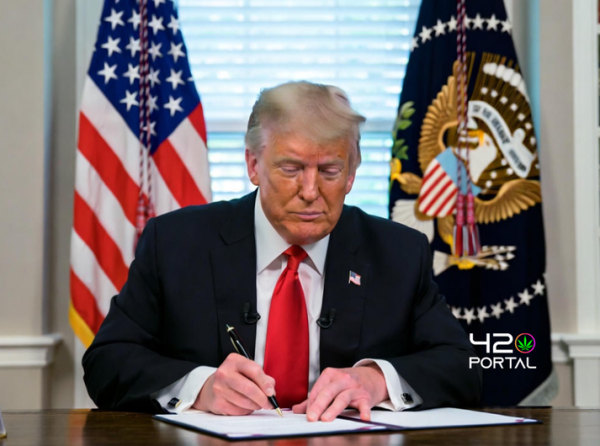
President Donald Trump has taken a significant step in shifting federal drug policy by signing an executive order aimed at speeding up the reclassification of marijuana from Schedule I to Schedule III under the Controlled Substances Act.
Currently treated the same as highly dangerous substances with no accepted medical use, marijuana would move to a category recognizing moderate to low potential for dependence, alongside medications like certain pain relievers containing codeine or ketamine. The directive instructs Attorney General Pam Bondi to prioritize the process, building on ongoing reviews to loosen restrictions that have long hampered scientific study.
Trump described the change as grounded in evidence, pointing to marijuana's potential role in medical treatment, particularly as a less addictive option for chronic pain management compared to opioids that have driven widespread addiction crises. By easing federal barriers, the move is expected to unlock more robust research into cannabis's therapeutic benefits, risks, and applications.
This isn't a green light for recreational use or full federal legalization. Criminal penalties remain unchanged, and states with existing laws permitting medical or adult-use marijuana won't see immediate overhauls. However, the shift could bring practical relief to legal cannabis businesses, such as improved access to banking services and fairer tax treatment.
The decision comes amid intense lobbying from the cannabis industry, which has pushed for reforms to align federal rules with growing state-level acceptance and public support. Additional provisions in the order call for exploring broader availability of full-spectrum CBD products derived from hemp, potentially integrating them into federal health programs.
Reactions are mixed within Trump's own party. Some conservative lawmakers and groups have voiced concerns that the change could undermine efforts against drug abuse or send confusing messages, especially amid crackdowns on illegal narcotics. Others see it as a pragmatic acknowledgment of evolving science and voter attitudes, with polls showing strong backing for medical access.
While the executive order accelerates the bureaucratic path through the DEA, final reclassification will still require formal rulemaking. Nonetheless, it marks a notable evolution in Washington's approach to cannabis, prioritizing medical potential over decades-old prohibitions.
Reference
Currently treated the same as highly dangerous substances with no accepted medical use, marijuana would move to a category recognizing moderate to low potential for dependence, alongside medications like certain pain relievers containing codeine or ketamine. The directive instructs Attorney General Pam Bondi to prioritize the process, building on ongoing reviews to loosen restrictions that have long hampered scientific study.
Trump described the change as grounded in evidence, pointing to marijuana's potential role in medical treatment, particularly as a less addictive option for chronic pain management compared to opioids that have driven widespread addiction crises. By easing federal barriers, the move is expected to unlock more robust research into cannabis's therapeutic benefits, risks, and applications.
This isn't a green light for recreational use or full federal legalization. Criminal penalties remain unchanged, and states with existing laws permitting medical or adult-use marijuana won't see immediate overhauls. However, the shift could bring practical relief to legal cannabis businesses, such as improved access to banking services and fairer tax treatment.
The decision comes amid intense lobbying from the cannabis industry, which has pushed for reforms to align federal rules with growing state-level acceptance and public support. Additional provisions in the order call for exploring broader availability of full-spectrum CBD products derived from hemp, potentially integrating them into federal health programs.
Reactions are mixed within Trump's own party. Some conservative lawmakers and groups have voiced concerns that the change could undermine efforts against drug abuse or send confusing messages, especially amid crackdowns on illegal narcotics. Others see it as a pragmatic acknowledgment of evolving science and voter attitudes, with polls showing strong backing for medical access.
While the executive order accelerates the bureaucratic path through the DEA, final reclassification will still require formal rulemaking. Nonetheless, it marks a notable evolution in Washington's approach to cannabis, prioritizing medical potential over decades-old prohibitions.
Reference