







The Transportation Security Administration Updates Policy on Medical Marijuana
05/22/2026
Travelers who use marijuana now have clearer expectations when passing through airport security checkpoints across the United States. With cannabis legalized in many states for both medical and recreational purposes, millions of Americans regularly consume various marijuana products. Yet federal regulations at airports create ongoing uncertainty for those who wish to bring their preferred items on flights, particularly between states where marijuana remains fully legal at the local level.
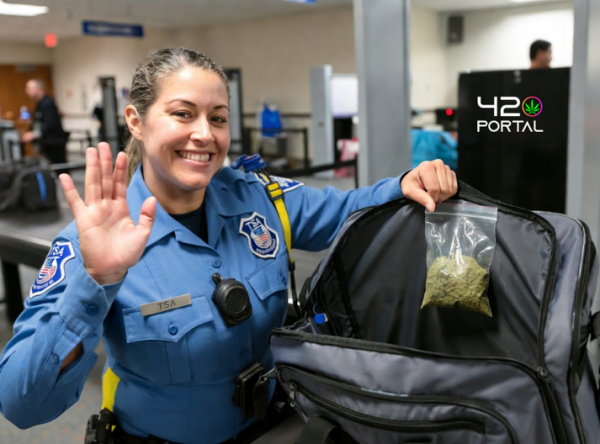
The TSA recently refined its public guidance on medical marijuana. Security officers do not actively seek out cannabis during screenings. Instead, their primary responsibility is to identify potential threats to aviation safety. If officers encounter marijuana or other substances during routine checks, they refer the matter to appropriate law enforcement personnel rather than handling it themselves. This approach leaves final decisions about legality to officers operating under specific state or federal jurisdictions.
Marijuana remains classified as illegal under federal law despite widespread state-level acceptance. This conflict complicates travel because products purchased legally from licensed dispensaries in states like California are subject to federal statutes at airports. Hemp-derived items containing THC sometimes fall into a legal gray area under federal rules, adding further confusion for passengers. Small personal amounts of marijuana rarely lead to serious federal charges, according to patterns observed over recent years. Authorities tend to prioritize larger quantities associated with trafficking.
Experienced legal observers note that carrying more than an ounce of cannabis flower increases risk noticeably compared to edibles or other discreet forms. Passengers with substantial volumes have faced arrests in some cases, though prosecutions for modest personal supplies prove uncommon. Medical documentation has helped resolve certain incidents favorably in the past.
International travel with marijuana continues to pose substantial dangers. Many countries enforce strict prohibitions and impose severe penalties on travelers caught with any amount of cannabis. Domestic flyers benefit from the TSA's emphasis on security over drug enforcement, yet they must still navigate conflicting federal and state laws.
Reference
The TSA recently refined its public guidance on medical marijuana. Security officers do not actively seek out cannabis during screenings. Instead, their primary responsibility is to identify potential threats to aviation safety. If officers encounter marijuana or other substances during routine checks, they refer the matter to appropriate law enforcement personnel rather than handling it themselves. This approach leaves final decisions about legality to officers operating under specific state or federal jurisdictions.
Marijuana remains classified as illegal under federal law despite widespread state-level acceptance. This conflict complicates travel because products purchased legally from licensed dispensaries in states like California are subject to federal statutes at airports. Hemp-derived items containing THC sometimes fall into a legal gray area under federal rules, adding further confusion for passengers. Small personal amounts of marijuana rarely lead to serious federal charges, according to patterns observed over recent years. Authorities tend to prioritize larger quantities associated with trafficking.
Experienced legal observers note that carrying more than an ounce of cannabis flower increases risk noticeably compared to edibles or other discreet forms. Passengers with substantial volumes have faced arrests in some cases, though prosecutions for modest personal supplies prove uncommon. Medical documentation has helped resolve certain incidents favorably in the past.
International travel with marijuana continues to pose substantial dangers. Many countries enforce strict prohibitions and impose severe penalties on travelers caught with any amount of cannabis. Domestic flyers benefit from the TSA's emphasis on security over drug enforcement, yet they must still navigate conflicting federal and state laws.
Reference