







Ohio Warns Residents: Marijuana Legally Bought in Michigan May Violate State Law
11/28/2025
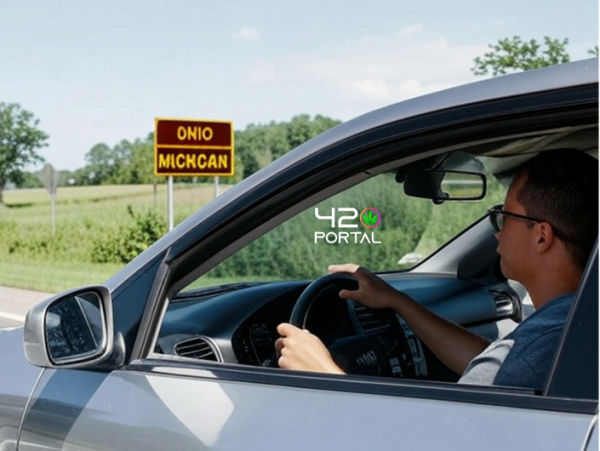
State officials are reminding Ohio adults that bringing recreational marijuana purchased in Michigan across the border could result in criminal charges, even though both states have legalized adult-use cannabis.
Under Ohio’s voter-approved law, adults 21 and older may possess up to 2.5 ounces of flower and 15 grams of concentrates, but only if the cannabis was obtained from an Ohio-licensed dispensary or grown at home. Products purchased out of state, including from neighboring Michigan, do not qualify for the same legal protections.
Law enforcement agencies say the distinction matters. A Michigan dispensary receipt does not shield an Ohio driver from charges, and edibles are especially risky: Ohio weighs the entire product, meaning a 200-gram infused chocolate bar could trigger felony-level possession penalties.
Michigan allows any adult 21 or older to buy up to 2.5 ounces per transaction with no residency requirement, and its longer-established market often offers lower prices and wider selection than Ohio’s newer dispensaries. That price gap has fueled regular cross-border trips, particularly in northwest Ohio communities near the state line.
Transporting any amount of marijuana across state lines also violates federal law, though federal prosecutions for small quantities remain rare.
Ohio’s more than 100 dual medical and adult-use dispensaries continue to expand, and home cultivation of up to six plants per person (12 per household) is permitted. Public consumption and possession in vehicles remain prohibited.
The Ohio Department of Commerce, which oversees the state’s cannabis program, emphasizes that the in-state requirement ensures products undergo mandatory testing for pesticides and heavy metals, as well as accurate THC labeling—standards not guaranteed for out-of-state purchases.
Advocates for national reform argue that the border restrictions highlight the need for federal legalization to eliminate conflicting state rules. Until then, authorities say Ohioans who choose to buy in Michigan do so at their own legal risk.
Reference
Under Ohio’s voter-approved law, adults 21 and older may possess up to 2.5 ounces of flower and 15 grams of concentrates, but only if the cannabis was obtained from an Ohio-licensed dispensary or grown at home. Products purchased out of state, including from neighboring Michigan, do not qualify for the same legal protections.
Law enforcement agencies say the distinction matters. A Michigan dispensary receipt does not shield an Ohio driver from charges, and edibles are especially risky: Ohio weighs the entire product, meaning a 200-gram infused chocolate bar could trigger felony-level possession penalties.
Michigan allows any adult 21 or older to buy up to 2.5 ounces per transaction with no residency requirement, and its longer-established market often offers lower prices and wider selection than Ohio’s newer dispensaries. That price gap has fueled regular cross-border trips, particularly in northwest Ohio communities near the state line.
Transporting any amount of marijuana across state lines also violates federal law, though federal prosecutions for small quantities remain rare.
Ohio’s more than 100 dual medical and adult-use dispensaries continue to expand, and home cultivation of up to six plants per person (12 per household) is permitted. Public consumption and possession in vehicles remain prohibited.
The Ohio Department of Commerce, which oversees the state’s cannabis program, emphasizes that the in-state requirement ensures products undergo mandatory testing for pesticides and heavy metals, as well as accurate THC labeling—standards not guaranteed for out-of-state purchases.
Advocates for national reform argue that the border restrictions highlight the need for federal legalization to eliminate conflicting state rules. Until then, authorities say Ohioans who choose to buy in Michigan do so at their own legal risk.
Reference