







Indiana Governor Opens Door to Marijuana Legalization Talks Amid Regional Pressures
03/27/2026
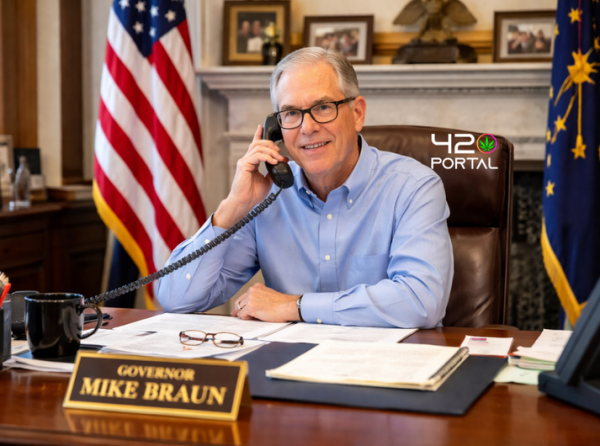
Indiana finds itself at a crossroads regarding marijuana policy as its governor acknowledges the need to confront the issue of legalization. With every neighboring state now permitting some form of cannabis use, pressure mounts for the Hoosier State to reconsider its longstanding prohibition. Governor Mike Braun has expressed a neutral stance on medical marijuana while expressing particular interest in providing access for veterans who might benefit from its therapeutic properties. He has also noted that potential federal changes could accelerate momentum for reform in Indiana.
Despite this openness to conversation, significant hurdles remain. Lawmakers in the state legislature have shown little enthusiasm for advancing either medical or recreational cannabis measures. Instead, recent sessions have emphasized stricter controls on hemp-derived products containing THC and limitations on advertising from dispensaries in other states. These actions reflect ongoing concerns about public safety and the sufficiency of evidence supporting broad medical applications.
Public opinion appears to favor reform, with surveys indicating that a majority of Indiana residents support legalization efforts. Advocacy organizations continue to push for policy changes that would align Indiana with its neighbors and reduce criminal penalties for small-scale possession. Under existing statutes, even minor amounts of marijuana can lead to criminal charges, creating challenges for many citizens.
The regional context plays a critical role in this debate. Illinois, Michigan, Ohio, and Kentucky have all implemented legal frameworks for cannabis, transforming the Midwest into a patchwork where Indiana stands apart. This isolation may influence economic factors as well, with potential tax revenue and regulated markets offering alternatives to the current underground activity.
As discussions evolve, the focus remains centered on balancing individual freedoms with community well-being. Medical access for specific groups, such as veterans, could serve as an initial step if broader recreational legalization faces continued opposition. Observers watch closely to see whether these initial signals will translate into tangible legislative action in upcoming sessions.
Reference
Despite this openness to conversation, significant hurdles remain. Lawmakers in the state legislature have shown little enthusiasm for advancing either medical or recreational cannabis measures. Instead, recent sessions have emphasized stricter controls on hemp-derived products containing THC and limitations on advertising from dispensaries in other states. These actions reflect ongoing concerns about public safety and the sufficiency of evidence supporting broad medical applications.
Public opinion appears to favor reform, with surveys indicating that a majority of Indiana residents support legalization efforts. Advocacy organizations continue to push for policy changes that would align Indiana with its neighbors and reduce criminal penalties for small-scale possession. Under existing statutes, even minor amounts of marijuana can lead to criminal charges, creating challenges for many citizens.
The regional context plays a critical role in this debate. Illinois, Michigan, Ohio, and Kentucky have all implemented legal frameworks for cannabis, transforming the Midwest into a patchwork where Indiana stands apart. This isolation may influence economic factors as well, with potential tax revenue and regulated markets offering alternatives to the current underground activity.
As discussions evolve, the focus remains centered on balancing individual freedoms with community well-being. Medical access for specific groups, such as veterans, could serve as an initial step if broader recreational legalization faces continued opposition. Observers watch closely to see whether these initial signals will translate into tangible legislative action in upcoming sessions.
Reference