






How Medical Marijuana Became America's Black Market Pipeline
01/08/2026
Oklahoma has become one of the biggest sources of illegal marijuana flooding black markets across the United States, even years after legalizing medical cannabis. What started as a booming industry following the 2018 voter approval has spiraled into a massive trafficking problem, with much of the state's production ending up untaxed and untraceable in other states.
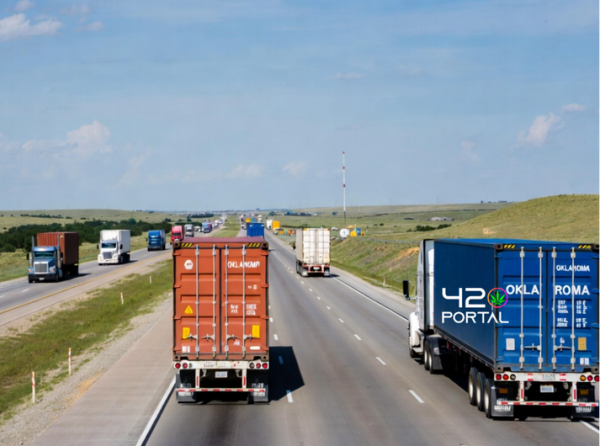
At the height of the surge, experts estimated that around 40 percent of the nation's black-market weed originated right here in Oklahoma. Semi-trucks loaded with the product regularly head out to nearly every corner of the country, taking advantage of the state's central location where major interstates like I-35 and I-40 cross. Texas has emerged as a top destination, creating particular headaches along the border areas and drawing in armed gangs who rob grows before hauling the haul back south.
The numbers paint a stark picture of the scale. In just the past couple of years, law enforcement has shut down thousands of unlicensed operations—over 7,000 in total—while seizing hundreds of thousands of plants and tens of thousands of pounds of processed marijuana. Hundreds of arrests and criminal cases have followed, but the flow hasn't stopped. A huge discrepancy shows up in the official tracking system: tens of millions of pounds of marijuana get tagged as produced, yet only a tiny fraction is recorded as legally sold. The rest? It's widely assumed to vanish into the underground economy.
Many of these illicit farms are tied to sophisticated criminal networks, including groups with connections to Mexico and China. These organizations have smartly moved operations inside U.S. borders, exploiting relatively lax medical marijuana rules to set up shop under the radar. What looks like a legitimate business on paper often hides massive overproduction meant for out-of-state sales.
Efforts to crack down have made a dent—the total number of suspected grow sites has dropped dramatically from over 8,000 to around 1,500—but plenty of questionable operations remain under investigation. Untagged plants make it nearly impossible to know exactly how much is really being grown and shipped out.
In the end, Oklahoma's experiment with medical marijuana has unintentionally turned the state into a hub for domestic drug trafficking, feeding illegal markets nationwide while evading taxes and regulations meant to keep things controlled. Cleaning it up continues to be an uphill battle for authorities trying to separate legitimate patients from large-scale criminals.
Reference
At the height of the surge, experts estimated that around 40 percent of the nation's black-market weed originated right here in Oklahoma. Semi-trucks loaded with the product regularly head out to nearly every corner of the country, taking advantage of the state's central location where major interstates like I-35 and I-40 cross. Texas has emerged as a top destination, creating particular headaches along the border areas and drawing in armed gangs who rob grows before hauling the haul back south.
The numbers paint a stark picture of the scale. In just the past couple of years, law enforcement has shut down thousands of unlicensed operations—over 7,000 in total—while seizing hundreds of thousands of plants and tens of thousands of pounds of processed marijuana. Hundreds of arrests and criminal cases have followed, but the flow hasn't stopped. A huge discrepancy shows up in the official tracking system: tens of millions of pounds of marijuana get tagged as produced, yet only a tiny fraction is recorded as legally sold. The rest? It's widely assumed to vanish into the underground economy.
Many of these illicit farms are tied to sophisticated criminal networks, including groups with connections to Mexico and China. These organizations have smartly moved operations inside U.S. borders, exploiting relatively lax medical marijuana rules to set up shop under the radar. What looks like a legitimate business on paper often hides massive overproduction meant for out-of-state sales.
Efforts to crack down have made a dent—the total number of suspected grow sites has dropped dramatically from over 8,000 to around 1,500—but plenty of questionable operations remain under investigation. Untagged plants make it nearly impossible to know exactly how much is really being grown and shipped out.
In the end, Oklahoma's experiment with medical marijuana has unintentionally turned the state into a hub for domestic drug trafficking, feeding illegal markets nationwide while evading taxes and regulations meant to keep things controlled. Cleaning it up continues to be an uphill battle for authorities trying to separate legitimate patients from large-scale criminals.
Reference